
This week was a little less dense than the last, but still passed quickly
Refining service quality criteria
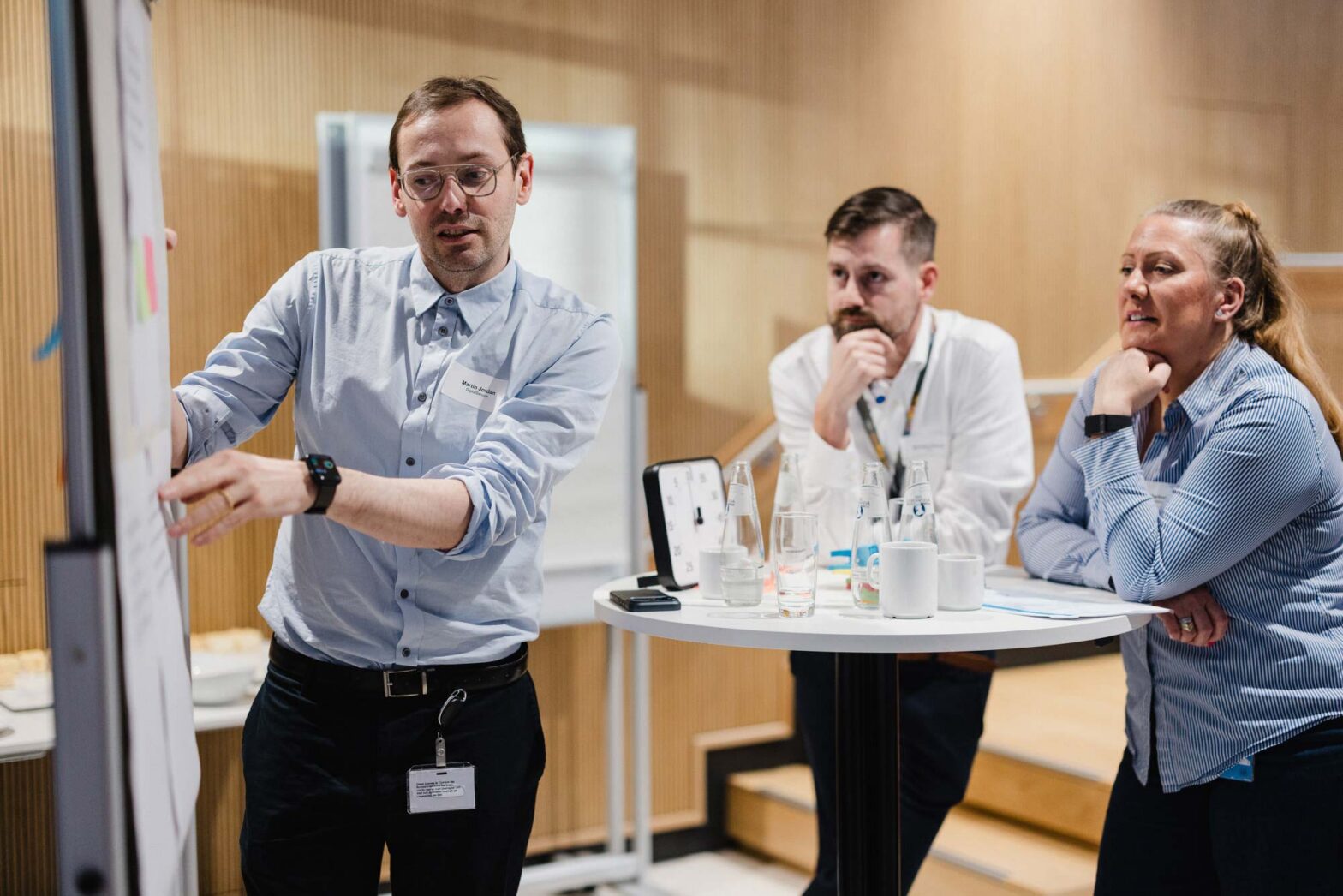
On Thursday and Friday, we wrapped up the 5-part workshop series for defining service quality criteria. It was the second 2-day workshop we ran for civil and public servants.
Since gathering in the second half of January, 8 productive weeks have gone by quickly. 3 citizen workshops were held in the meantime, and a representative quantitative survey was conducted with 1,500 participants. For this week, service designer Birga and content designer Linn prepared the latest drafts of the 5 service quality criteria for review. Birga and Stefan had put together an engaging workshop to review everything, give input on format and language, and draft a high-level roll-out plan.
We split the 35-ish people into 4 groups. I facilitated one of them. There was plenty of time for discussion, yet we sometimes ran out of it. This kind of space for cross-government and cross-level exchange is rare, especially in person. So everyone was eager to use it. There is a clear demand for regular remote gathering formats for further exchange.
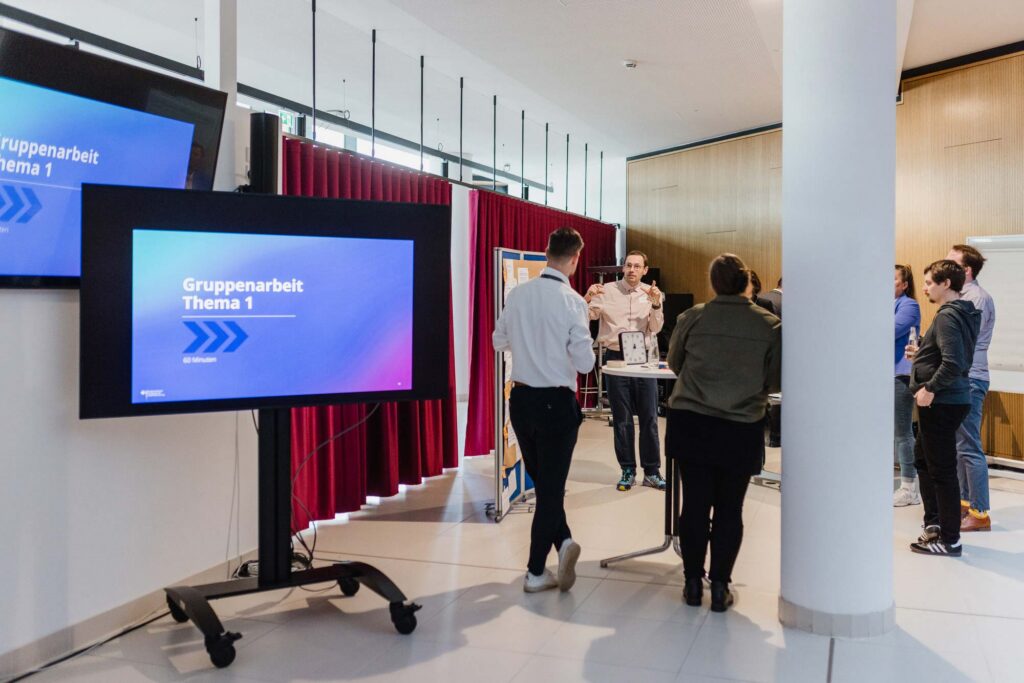
The service quality criteria should be finished and published by the end of the month. Many valid open questions remain about implementation support, senior commitment and measuring change. We will work on these topics in the coming weeks.
When people are in town, you’d better use their time. Researcher Joshua and I used the chance on Thursday morning to meet with UX designer Jennifer. She is working in the City of Munich and asked us for support and advice on collecting feedback throughout a service. We had a valuable exchange, and Joshua shared the foundations of a new guidance he is producing for the handbook section of the Service Standard. Once again, the heavy dependency on external form builder tools became clear to us. People find it incredibly hard to measure, track and make changes to how they collect user feedback, whether it’s quantitative or qualitative. Testing guidance content early is important. Joshua will utilise the feedback to draft the full guidance.
Fittingly, we had a second, more in-depth conversation about a potential quantitative study on good service interface and people’s trust in the German state that a research body wants to do with us in the summer. It would allow us to weave in the service quality criteria and unified screen designs, utilising the cross-government branding and design system. It will take a few more months to set it up and work it all out, but I am hopeful it will create robust qualitative data points to strengthen our case for better service design in German government.
Getting some recognition
Awards are always a little odd. One person gets the limelight for the work done by many. It’s helpful for the cause, even though it’s not accurate or exactly right.
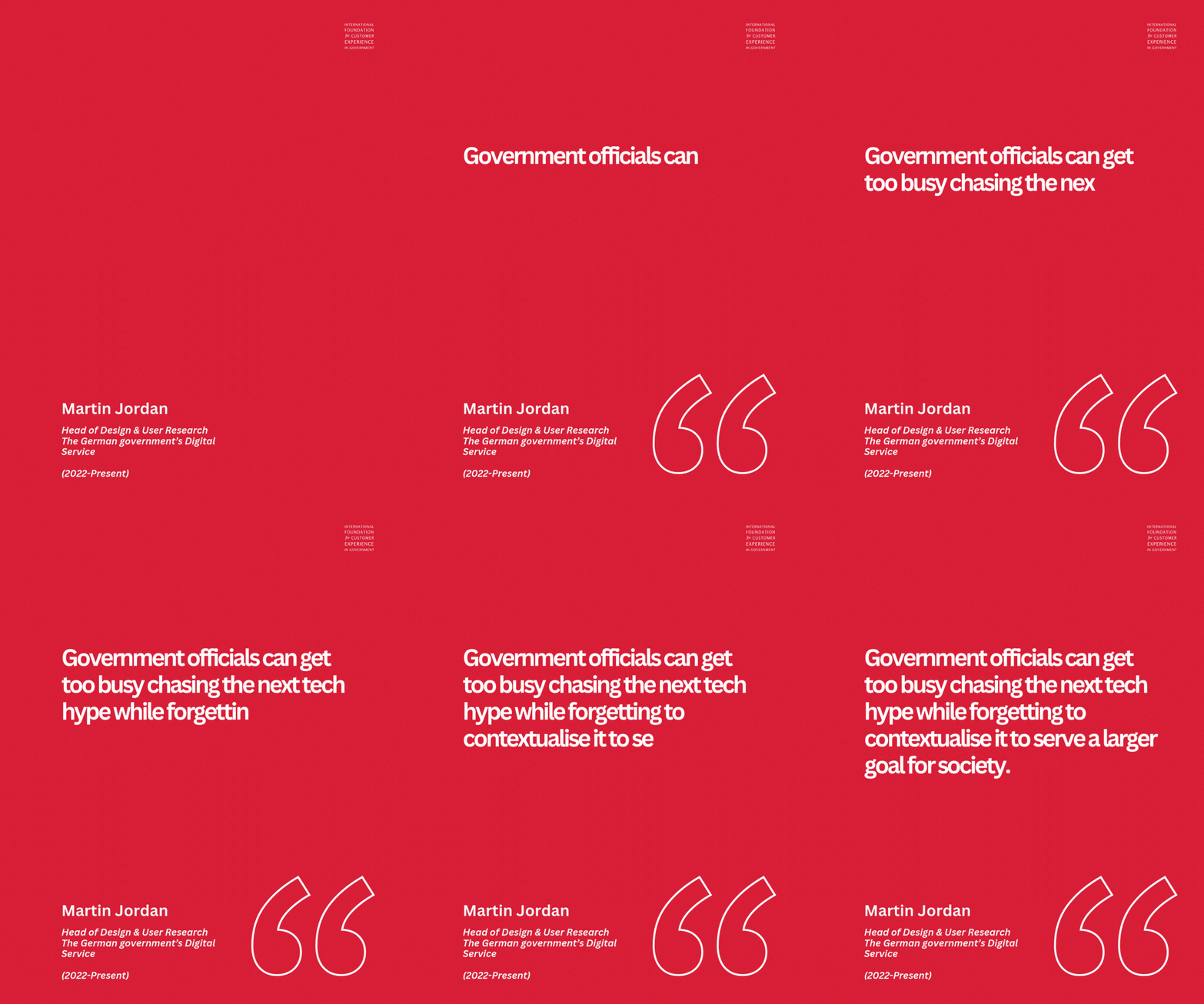
The International Foundation for Customer Experience in Government decided to highlight the work I am able to do in the German government, calling me a trailblazer. To make services and, therefore, government work for its people, it requires blazing through a lot of trails.
Joining up services so that people can understand and navigate them, and get the outcomes they need, in the fastest possible way, is not easy. It’s pretty hard. It’s the work of years or decades. Things move at glacial speeds. By the nature of this work, overcoming cultural and structural silos is work done by a network of people.
Such recognition can give us the boost we occasionally need to keep going when things feel particularly hard. When the opportunity windows we sense are there don’t yield the progress we were aiming for. Kara and I have been speaking about the long slog of government transformation for some years. Small wins to stay motivated is something we mention in our talks.
“Despair is the unforgivable sin” is a quote I sent to Tobias from CityLAB Berlin the other night. We had an exchange earlier that evening about our specific struggles with government transformation. Coincidentally, we also spoke about winning awards – and how it doesn’t persuade the stakeholders we desperately need to get on board. But in the best case, it allows more people to see the work we are trying to do and gets more folks to join the mission.
We take any extra fuel we can get to keep going.
Getting into writing
I wrote a lot this week.
On Sunday and Monday, I finished 2 conference proposals for ‘Service Design in Government’ for September. I am finishing the 3rd one over the weekend, as the closing date got extended.
The first one I wrote for service designer Nina and me:
Policy and service design as one – how Germany skips the silos
Policy, digital, and operations don’t have to be distant and disconnected. When they work together tightly, policy intent is better met and implementation gaps close. Outcomes for people improve, and government’s impact increases.
Germany shows how it can be done and what works in its context. For the past 3 years, multidisciplinary digital teams have been running dozens of policy discoveries. Working closely with policy officers in their respective domains for several weeks, small teams, including service designers, inform early-stage policies. Their evidence-based, user-centred work improves laws, regulations and standards – eventually leading to better services.
This case study demonstrates how mandatory digital-ready policy checks and a Service Standard that requires policy iteration are a game-changer for government ways of working.
In addition to this 120-word summary, I wrote a 836-word outline.
The second proposal I entered together with Clara and Kara:
What we gain when we leave – how movement in and across the public sector is good for us all
Civil and public servants don’t stay. Most of them, at least. They move positions, they leave roles. There is value in it – for the people leaving, the people staying, and the organisations involved; if it’s managed well.
This session explores why changing organisations can be good: for career growth and personal development, and for sector interconnection and silo-bursting collaboration. We’ll also talk about some of the barriers and disadvantages to movement. Through inputs, open experience sharing, and discussion, the session maps different pathways and tells personal stories, including the effort and investment required to make movement work well. Participants can gain inspiration, encouragement, and tips about how to manage not staying put.
In addition to these 112 words, there are another 520 to explain the session in more detail. Clara did the vital sparring and editing with me. I enjoyed writing these proposals and hope they all pass the reviewing jury.
I also made good progress with blog posts. The other Clara, Head of Product Management, and I have outlined our post on ‘Liberties and constraints – how delivery principles guide our service development’. I am ready to write it out next week on the train to London.
Product manager Bene and I launched our first joint co-writing effort after motivating each other to write more for years. He published a blog post this week titled ‘How we work at the Centre for Legal Drafting’ and asked me whether we’re on par with the number of published posts. I counted, made a spreadsheet for it and had to say ‘Nope, sorry’. Currently, I am 1 post ahead of him, but that always keeps changing. Bene tweaked the spreadsheet, added a counter, and conducted further analysis. His blog posts are shorter and have more images. Mine have more references (I was recently asked to reduce the number of links by 1/3 – otherwise there would be even more) and are slightly easier to read. The latter is not relevant, as all of our texts’ language is way too complicated. We will try to do better. Our forthcoming joint post on ‘Creating transparency in service development using open roadmaps’ needs to be the testing ground for it.
What’s next
On Monday, I will welcome another new starter. Lisa will join the ‘Start a business’ team as a service designer. She is a returner, as she worked on the tax navigator for retirees while she was a Tech4Germany fellow in 2020. Before that, she worked as a service designer at Stockport Council. That is also where our paths crossed the first time. When we ran the Local Gov Design Day in 2019, Lisa was one of the speakers at our conference day in Birmingham. Later, I published a blog post of Lisa’s on ‘Being a designer in local government’ on the UK‘s Design in Government blog. Gov design is a small world.
In the afternoon, I will participate in the second gathering of the NExT Workshop, which we have formed to produce a white paper on issues related to digital identity.
I will take the second half of the week off. I will be meeting with former colleagues and friends. My 10-hour train journey is mostly reserved for writing. I am looking forward to it.