
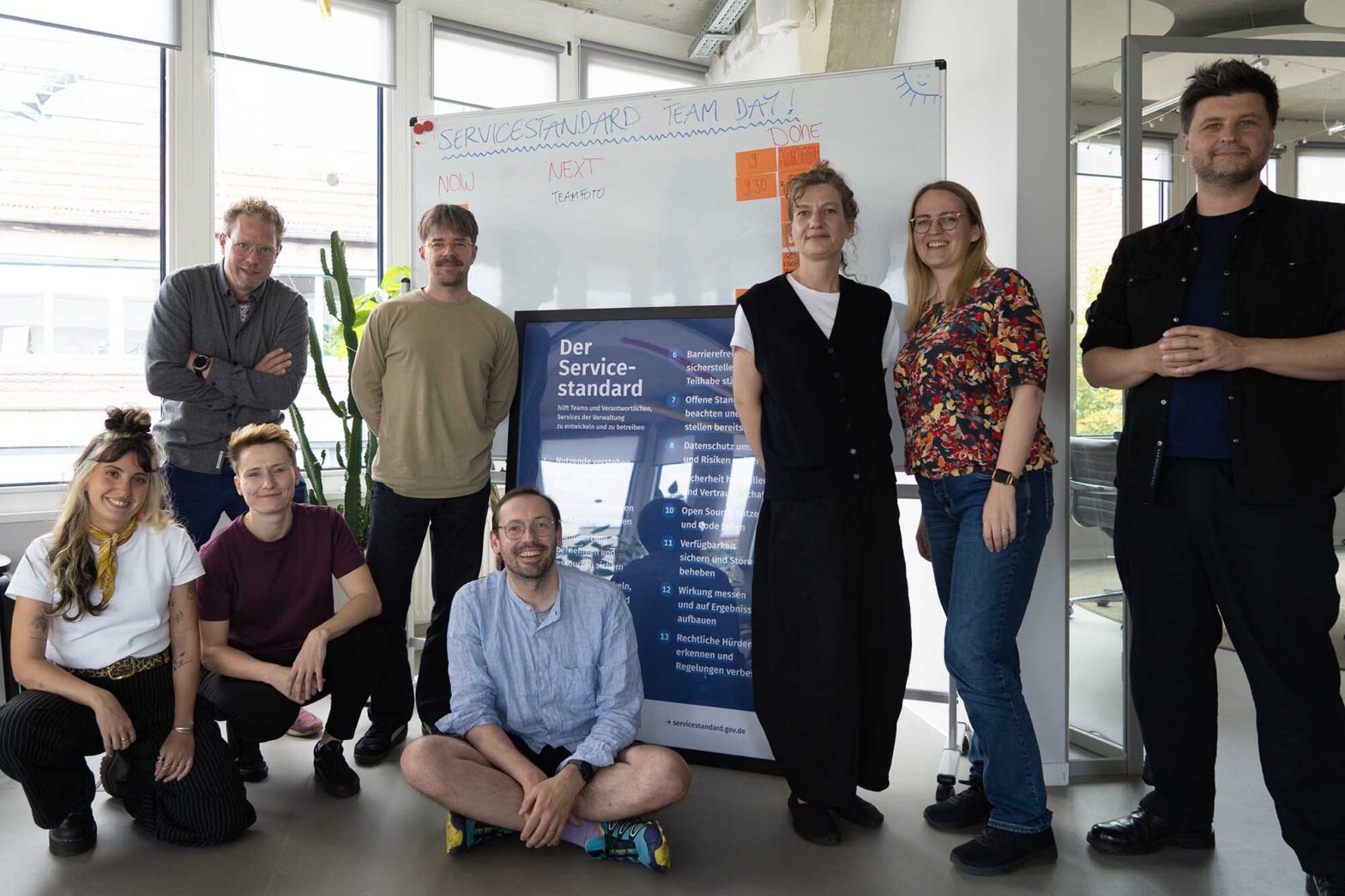
The Service Standard team was almost complete on Tuesday. 9 of the 10 permanent team members came to the office for an on-site team gathering.
For a day like that, I made the larger poster last year, which prominently sat at the back.
Having a Service Standard team day
We gathered for some 6 hours. It was the time the much-grown team needed to get to know each other, get in sync, and figure out how to work well together. Facilitated by supporting agile coach Johanna, we looked at the inner part of the ecosystem, took an animal personality test, and introduced ourselves with some questions and a profile.
Through several short formats, we got to talk about personal preferences in styles of working, collaborating and decision-making. We also covered responsibilities and feedback culture. The team gave the day a ROTI score of 4.75 out of 5, which is pretty fantastic.
The on-site workshop day was important in establishing the groundwork for working together in the new formation. It was basic trust-building. We are off to a good new start, ready to get even more things done.
Revamping our service design training
Our most popular training is back: ‘Introduction to service design’ – and it’s free of charge for German public servants.
Over 1,000 civil servants and public servants have been trained in the UK since 2018, and over 50 colleagues in Germany since 2022. In the UK government, we had some 500+ people on the waiting list when we stopped running it at scale out of the Government Digital Service. It remains popular. Last month, for Services Week 2026, HMRC ran the training again. My former colleagues Clara Greo and Ignacia Orellana keep offering it.
As the name suggests, the training offers an introduction to designing services. It explains why it matters and how we do it. It offers an overview of approaches and makes them tangible through several exercises. It gives people an understanding of a structured service design approach and how to apply it in their context.
The training is well established, but it’s never the same. It’s a practised Ship of Theseus. ‘How we run service design training as an agile service’ is the headline of a blog post that Clara and I wrote a few years ago. We describe how the training continues to evolve to stay fresh and relevant as participants’ needs change. Following an active learning approach, it’s a blend of trying things out, reflecting in groups, and getting some input. The training is the opposite of front-of-class teaching.
The German August edition will include one significant change: it will be deeply interwoven with the Service Standard. Apparently, that was an idea I already had in 2019. But I forgot about it and had to be reminded of it by my former team. We never got to implement it then. It was a great idea then, and it is now.
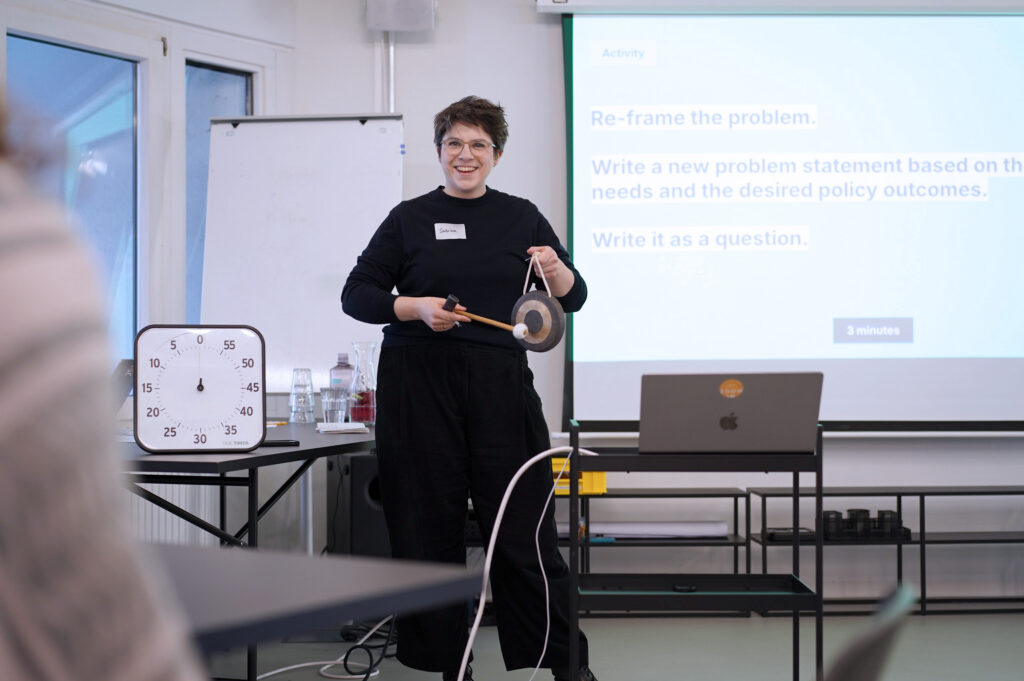
The Service Standard and its points will be a prominent and explicit pillar throughout the training. Hands-on exercises and examples will reference the individual points – not all of them, but most.
For the first time, we ran a German edition last year. We either contextualised examples or replaced them entirely. It was well received. Colleagues from other public sector organisations like the Federal Printing Office and the State Pension provider participated as well – as we wanted to open it up. Previously, from 2022, we ran an English version internally at Digital Service.
Now, we continue on that journey and make the training a formal part of our Service Standard offering. Several spots are reserved for colleagues from the Federal Ministry for Digital Transformation and Government Modernisation. There will be a few colleagues from Digital Service, too. For good discussion and to maximise the learning effect, we want to have a good mix of public servants from different organisations.
I am therefore thrilled to see us open it up to more colleagues from across the public sector. The training literally has changed the trajectory of people’s careers. Over the years, we’ve heard that from former participants, which has given me goosebumps.
I did some outreach this week to gain interest from German public servants working in public services who are interested in joining and experiencing the gong.
Meeting another accessibility team
On Wednesday, my colleague Marion and I met with the accessibility testing team at the Federal Information Technology Centre (ITZBund). We had some 100 more formal minutes together before sharing a meal.
Through the exchange, we learned a few things:
- they are a team of 4 out of about 5,000 people at the ITZBund
- they are an internal service team that can be requested internally free of charge to review and test things in development
- they managed 120 projects last year
- they mostly focus on short tests and hand over in-depth testing to external partners
- they don’t have the chance to test with people with actual access needs or disabilities
- they don’t just offer tests, but take a workshop-based approach to educate people
- they have created their own tools for documenting checks they would like to host and offer openly
- they don’t see much usability testing happening in ITZBund
In time for the meeting, we also got our accessibility tools page live on barrierefreiheits-tools.gov.de. We put it together for Global Accessibility Awareness Day in late May. Only now have we connected the domain.
What’s next
We have another new starter joining us: a senior service designer, who will be working on digital welfare state services in a few weeks. In the meantime, there might be a chance to look further into life event frameworks. As I learned from people working at the City of Munich, they have been talking to counterparts in Hamburg recently. I would like us to develop a broader overview of what colleagues are doing nationally and internationally – including the Netherlands, Norway, Ireland and the OECD – and identify where we see further opportunities for patterns and approaches in the service areas we work in. There is a specific reference to service orientation around life events in the current German government’s coalition agreement, so we must not leave an opportunity window unused.
The book club at Digital Service starts reading Lou’s ‘Bad Services’ in the new week. The first part to read and discuss is ‘Chapter 1: Purpose’. I plan to join. To equip the 4th-floor library, I had to find some copies of the book that’s currently sold out. On Saturday, I successfully located enough books for people to receive their copy.