
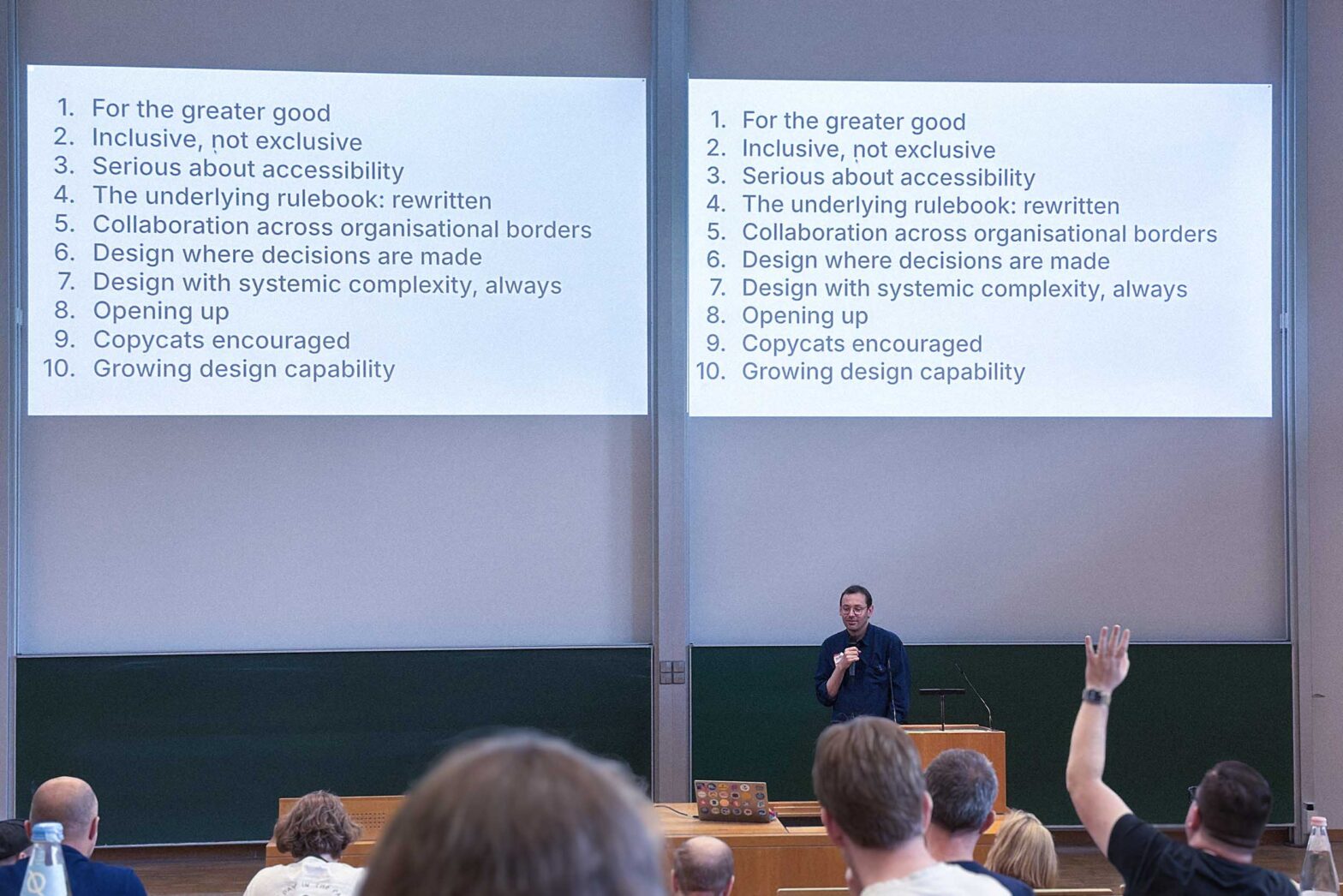
It’s been a decade since I first spoke about design in government at UX Camp Europe. It’s an international bar camp with about 600 participants held in Berlin every year over the Pentecost weekend. Back in June 2016, when relatively new at the Government Digital Service, I gave a talk titled ‘Designing for a better citizen experience’.
On Sunday, almost 10 years later, I decided to return for an extended talk about how design differs in the public sector.
With practical examples from our work at Digital Service, I walked through 10 main differences:
- For the greater good
- Inclusive, not exclusive
- Serious about accessibility
- The underlying rulebook: rewritten
- Collaboration across organisational borders
- Design where decisions are made
- Design with systemic complexity, always
- Opening up
- Copycats encouraged
- Growing design capability
I started writing my first notes last Sunday, the week before, listing 10 things. I only started writing the talk itself very early Sunday morning, and then while on the train. I delivered the 100+ slide presentation at 2 pm. So it was a truly spontaneous bar-camp-style delivery.
With a bit of technical routine now, I managed to record the talk and got it edited swiftly. The 40-minute presentation is available on YouTube.