
This was a week of input, rather than output. But it was meant to be. Because there were various events taking place. I managed to be at some and missed others.
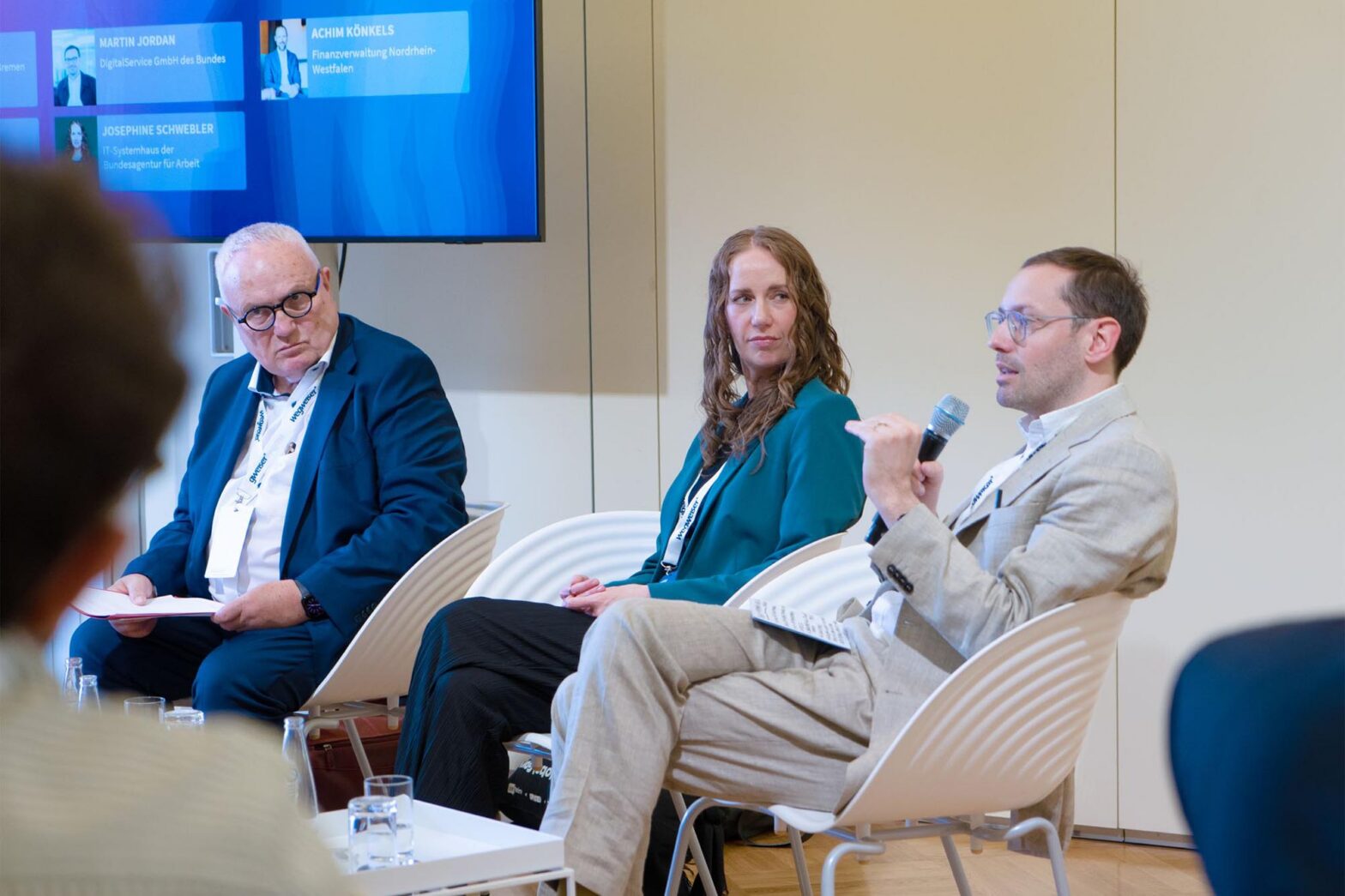
My main output was oral – for example, in the form of a panel discussion I participated in on Tuesday afternoon.
Debating inclusive organisations and their outputs
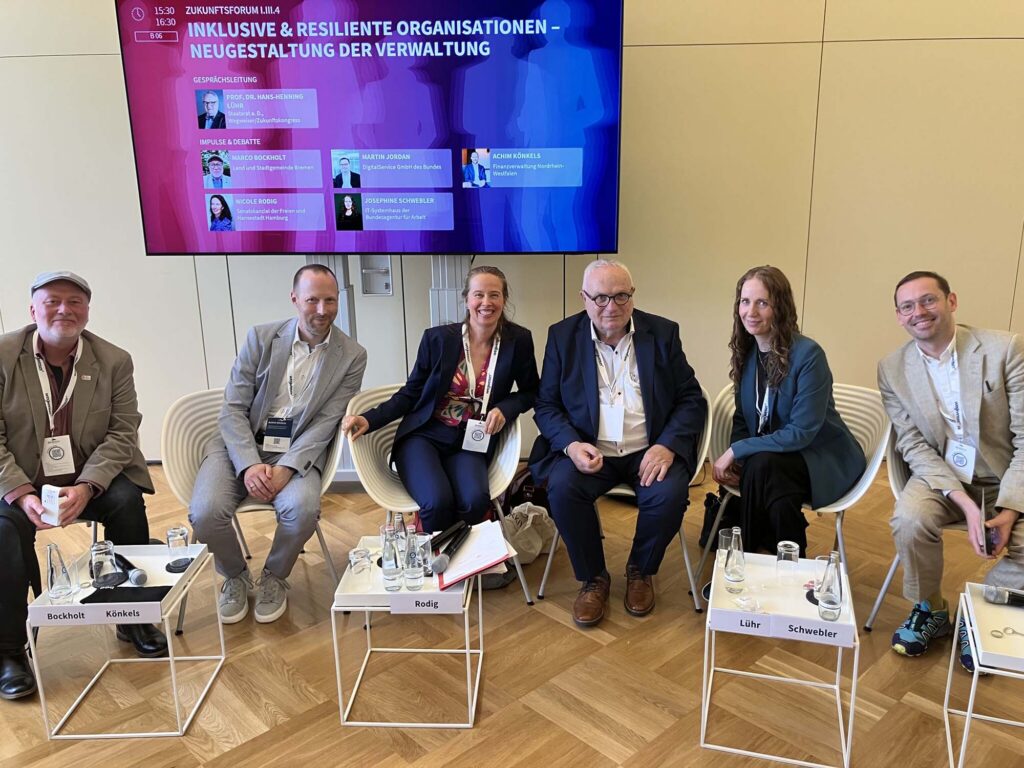
After joining a panel on accessibility last summer, I was invited back to Zukunftskongress (literally: ‘Future Congress’) by the host, Hans-Henning Lühr. He is the former vice finance minister of the city-state of Bremen, and we met years ago at a Public Service Lab conference he participated in.
This year’s panel topic was ‘Inclusive and resilient organisations – redesign of public administration’. There were 5 panellists. One of them was me. Two panellists are representatives of disabled employees in their government body. The other 2 were in charge of digital accessibility in their respective state or federal government organisation.
We didn’t really disagree on anything. Instead, we built on each other’s points and complemented each other. The crowd listening wasn’t big. Only about 20 people participated, as the parallel sessions drew strong attendance. One person reported how suppliers are almost willingly non-compliant with accessibility regulations. Another described being asked for hundreds of thousands of euros for accessibility-related change requests.
I talked about leaving the building, going where people with different lived experiences are, and testing inclusively and regularly. I would like to follow up with a colleague who is operating a user panel in Hamburg and another colleague who is building operational practice at the Federal Employment Agency. They seem to be ahead in several areas.
Immersing in futures in Copenhagen
The PolyFutures event in April wasn’t enough. I wanted even more. So I used a good portion of my annual learning and development budget to attend Future Days in Copenhagen. I narrowly missed last year’s event, so I prioritised it over the Creative Bureaucracy Festival, which has been a fixture in many colleagues’ calendars every year – even internationally.
Under the topic ‘currents of tomorrow’, some 400 people gathered for the self-described festival. It is pitched as an “annual gathering for those working at the edges of culture, design, governance, and systemic change”. That was enough for me to justify the time and money.
A broad range of people attended: People working in think tanks, consultancies, NGOs, as freelancers, and government organisations. All concerned, curious in the future – and shaping it through a designerly approach. It was a broader mix of views than most of the conferences I attend these days.
The presentations and workshops allowed us to see project work, methods, and the concerns, worldviews, and values driving it. Some things shown were slick speculative fiction made for the fun of it for commercial clients; others were community-rooted projects; and others took a global perspective based on academic work.
Unsurprisingly, quite a few presentations, talks and workshops had direct links to governments that commissioned the work. In conversation, people confirmed that even large-scale businesses rarely commission far-out investigative futures work. The time horizons are much smaller.
I was delighted to see some familiar and new work. Bas van de Poel from the Dutch design and innovation office Modem showed work done for the European Commission, Futures Garden. Anab Jain from Superflux talked about the work done with the UK Policy Lab and the Department for Environment, Food and Rural Affairs on the fictitious Ecological Intelligence Agency. Much was a blend of design-led foresight, speculative design, and immersive futures work.
The most powerful talk of the event was by Imandeep Kaur, founder of Civic Square. She summarised the global crisis we are in, discussed the inaction by political and industry leaders, and showed that action needs to be local. She highlighted that we might not need more designers and strategists, but rather plumbers and others who pull up their sleeves and get to work. I hope her talk becomes available online soon, as I like to revisit it and unpick its density.
Unsurprisingly, there was a strong UK presence, represented through various speakers and attendees. Due to the proximity, there were also various Germans in attendance. While there were a few participants from outside of Europe, the perspective was very continental. Some speakers addressed that throughout the 3 conference days.
After 2 events now, I would like to put together an international community call to discuss some of the work we have seen.
Missing some events and people
I skipped the Creative Bureaucracy Festival on Thursday and thus missed the book launch.
I missed the PolyFutures event on the day after, which the EU Policy Lab colleagues ran in Berlin.
I also missed Service Design Now, which also took place on Friday in Cologne, to celebrate 30 years of service design practice.
Furthermore, there was a parallel GovMesh event in Den Haag, in the Netherlands, to discuss service transformation, which I also declined.
Lastly, on Friday evening, there was also Digital Service’s annual summer party.
The one event I was still able to attend was the celebration of Berlin’s 20 years as a UNESCO City of Design. There was a panel discussion, an exhibition and time for exchange. So I approached the executive director of Singapore about running local events there in 2027. We will talk more later this year.
Launching new things
10 months after creating the first HTML prototype in Webflow, we finally launched dachmarke.gov.de. It is the new home of the German cross-government brand and design system. The journey here didn’t feel like an 80-20 Pareto execution. The first version is still limited. But it is out there, finally.
In another capacity and role, we also started the ‘sales’ of tickets for Public Service Lab Day 2026. For the 1-day conference, we are teaming up with the City of Munich. In parallel, I updated the website for the ‘Preis für gute Verwaltung’ (literally ‘Award for good administration’) for 2026. This year, I am getting more involved in the award’s operations. Although tempted, I have been resisting the urge to redesign it. That can be a task for next year. I also like to bring the 2 intertwined activities together visually.
In the past few weeks, I helped assemble the jury for this year’s award. It includes various people I worked with on the Service Standard and service quality criteria over the past few months. The website is now live and lists them all. The call for entries is also open.
Besides, I was in a couple of calls with the people involved in launching 3 new government services and platform offerings in the coming months. Across organisations, we are trying to align visual design languages and brand articulations.
What’s next
On Monday, I will be in a leadership training day.
On Tuesday, we run our annual performance review and salary calibration session. It is the accumulation of work over various weeks. On Friday afternoon, we had a mini-rehearsal among the discipline heads to give each other an overview of the planned promotions. It’s good to avoid surprises and sudden debates in a larger group when we are discussing the performance of about 70% of our 250 colleagues. Everything we can discuss ahead of the meeting, we should discuss.
Later in the week, I have blocked time to review our white paper on digital identity. There is quite a bit of work to do, so we can publish it on 1 July and start distributing it.
I will also interview more candidates for our open senior user researcher role.