
We have very little ‘churn’ in our design and user research discipline.
In just under 4 years, we only have the second person leave the team this week.
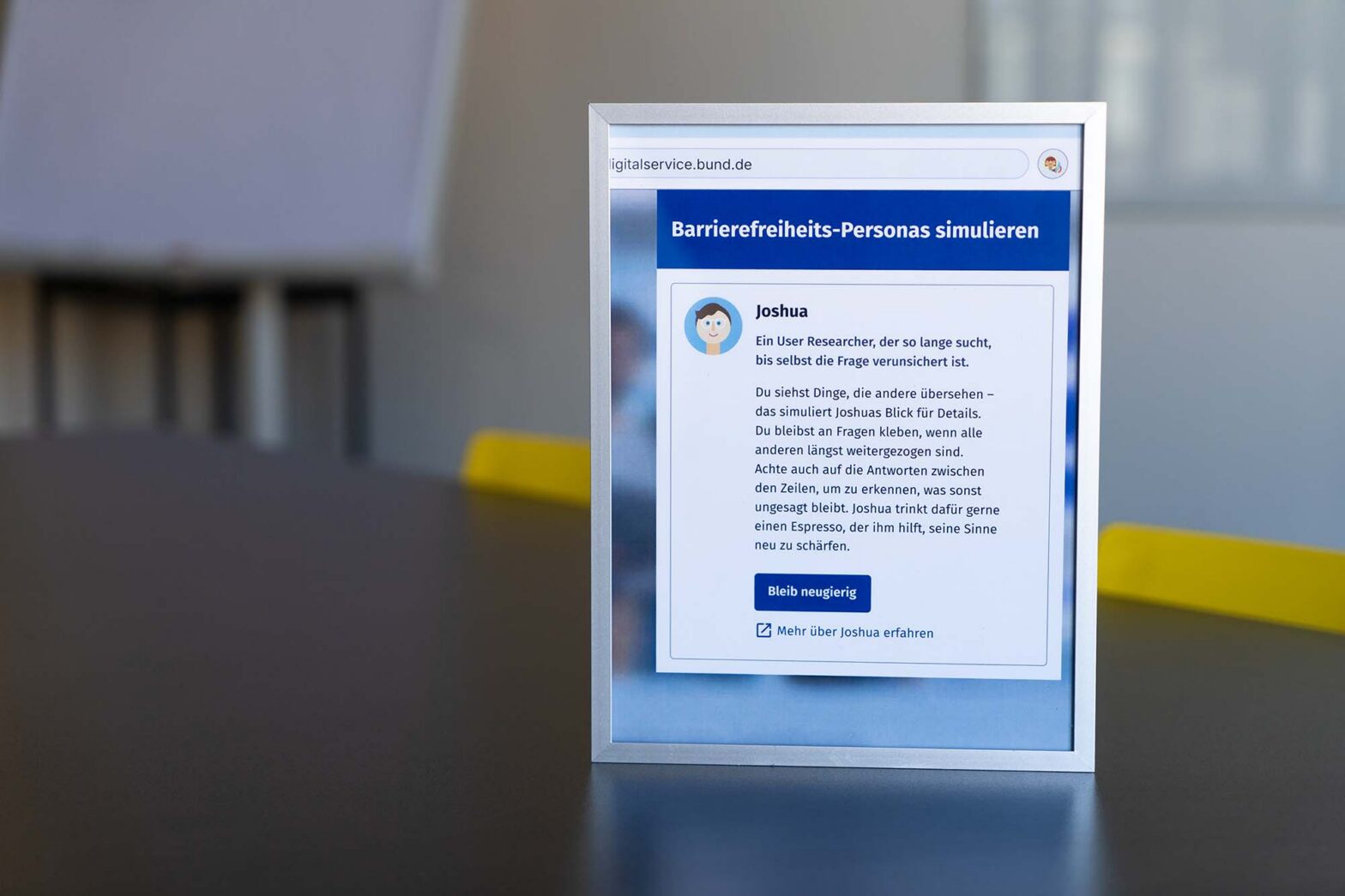
On Tuesday, we gave user researcher Joshua a proper farewell. There were speeches held, presents unwrapped, and hugs shared. He joined us as a user researcher in May 2024 and made his dent in justice services. Besides becoming the go-to person for the quantitative side of research across our discipline and beyond, he dabbled in product management and service ownership and also started coding. The result of the latter is our accessibility persona extension; the result of the former was the new inheritance certificate service.
As we had established at the Government Digital Service, a custom leaving gift was due. We already picked this tradition up when COO Philipp left in 2023. Now, with the hands-on support of content designers Torsten and Sue, we paid tribute to him and his work by turning Joshua into his own accessibility persona. I redrew the browser extension’s interface for that, then framed it. The gift was well received.
Producing authoritative naming guidance for services
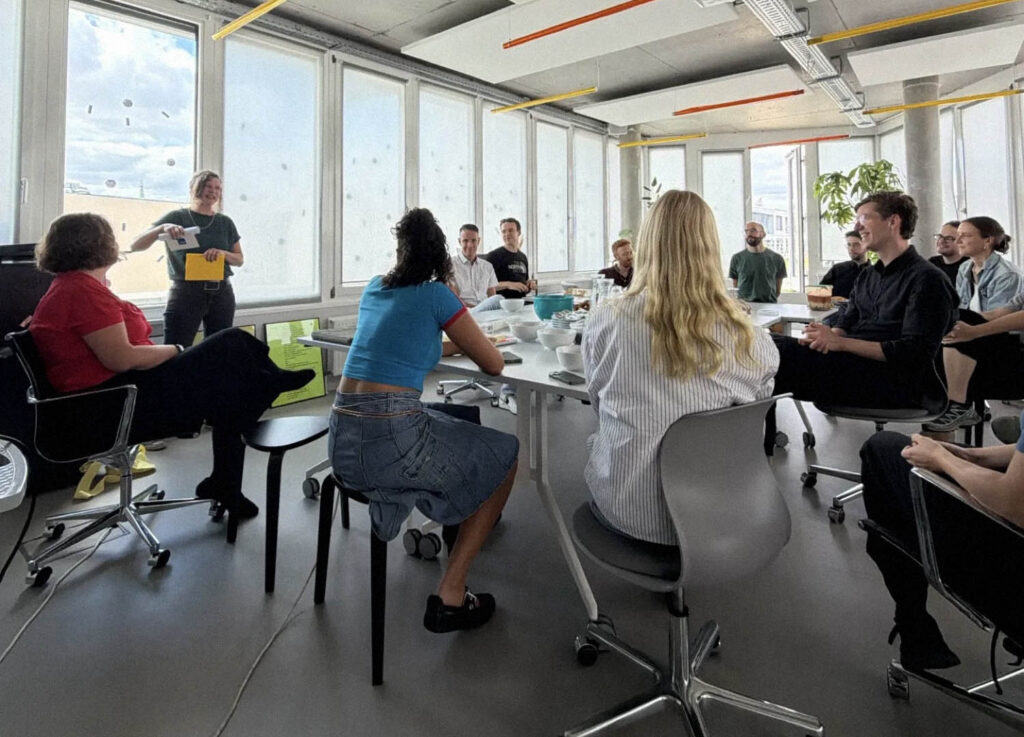
It’s good to have a deadline. I needed one for finishing my draft of the naming guidance for the handbook section of the Service Standard. The draft has some 642 words and a good dozen comments. During the team’s weekly ‘Share & feedback’ slot, I walked them through my draft. They commented straight away. So I got to add a few more comments.
For the draft, I drew from my 2023 Service Gazette article, the GOV.UK Service Manual ‘Naming your service’ guidance that Harry authored in 2017, and also Rebekah’s ‘Naming teams and services’ hands-on deck with tips. By remixing the smarts from these resources, the guidance becomes concrete and actionable. That’s important to me. Based on the content designers’ feedback, we should be able to refine and complete the guidance by the end of the month.
I collected various examples for well-named services from all levels of government. There is plenty of sound practice across Germany. But I would also like to include a few not-so-great examples. Here are a few I found:
- Using a government agency in a service name: ‘E-Auto-Förderung des Bundesumweltministeriums’ (literally: ‘Electric car subsidy scheme run by the Federal Ministry for the Environment’) – a better name would be ‘Apply for an electric car subsidy‘
- Referencing a law in a service: Bafoeg Digital (literally: ‘Federal Training Assistance Act digital’) – a better name would be ‘Apply for a study or apprenticeship loan’
- Using acronyms in a service name: ‘BZSt IBAN+’ (literally: Federal Tax Office International Bank Account Number plus’) – a better name would be ‘Share bank details with the tax office’
Especially the latter example is so outlandish that I cannot comprehend how no one challenged the name before their native mobile app was developed and launched. I also do not understand why this has to be a native mobile app, but that is a different topic and a different set of guidelines.
I am looking forward to getting our guidance out there so I can reference it in conversations. There is clearly a need for it.
Working towards better shared components
After NExT published the paper on digital identity, some people read and referenced it. Among them were the designers working on one of the digital identity components discussed in the paper. We were delighted to hear that. This week, we had an exchange with them. They kindly shared what they are working on. They also acknowledged that some issues covered in the paper were new to them. We got to see some fixes and improvements they are currently working on and testing with users. We plan to speak again in September. I hope we can support the work from where we are. It would benefit millions of users.
In that context, it was interesting to read through some of the 230+ comments people left on an article on Heise tech blog reporting on the paper. People shared their frustrations with using digital identity, comparing it both to other countries like Estonia, where things are much easier to use, and to public health insurance in Germany, where things are even worse. There seems to be broad consensus that things can be much better. One reader put it like this: “I had a quick read through the linked analysis and found myself agreeing with it. It breaks down in detail what users are expected to do, and explains why the drop-out rate is so high with these procedures. People get fed up, give up trying and go back to the benefits office instead. But there are specific suggestions for improvement, and perhaps lessons can be learnt from them.” I hope so, too.
On Wednesday, I also met with Thomas, lead designer for new patent services. He was in town, and we had time to catch up. I learned about their development over the past few months, and I received a few requests from their side. They are interested in talking to our justice service teams about plain vs legal language, multi-language support and the use of content management systems. I am happy to help. He and his team were also interested in learning more about shared payment components. I will make some links and introductions.
What’s next
I will participate in another check-in with the Competence Centre for Public IT (ÖFIT) regarding the ‘trust by design’ study, which we also discussed in our discipline weekly on Thursday.
In the latter part of the week, I need to continue working on our policy-service-design talks with Nina. The 2 confirmed conferences have requested promotions. So, I will check if I can produce a little video to promote our activities. I am generally curious about more video and audio content and formats.
In addition, I had a chat about our participation in the ‘Design Policy Days’. On 11 November, as part of it, there will be a ‘The State needs Design’ event. I might participate in a panel discussion, and we might run a workshop on that day.
On Friday, I will try to finish a design and user research discipline blog post that has been lingering for too long.
Throughout the week, I also need to make some progress on the few open tasks for the latest version of the introduction to service design training. We are 1.5 weeks away from running it with people across government. So, this week, we did further outreach as some seats were still reserved but unclaimed. It looks like we are bringing together a good mix of people from all levels of government. Various people will be travelling to Berlin for the 2-day training. I think we might run it another time later this year. That is relevant because some interested colleagues require waiting for approval, which may take a few extra days in their organisation. That is something we saw in the UK before, too. We have created a dedicated page for the training on the Service Standard website, which will help increase visibility and provide a permanent access point to express interest in the training.